
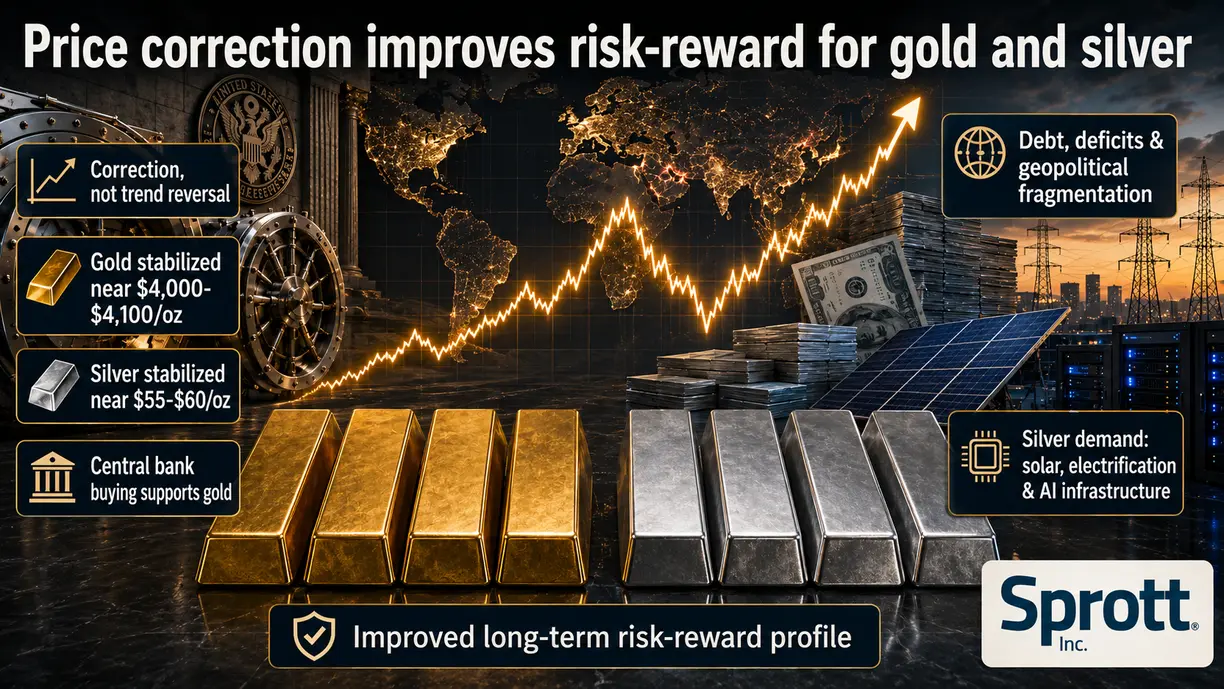
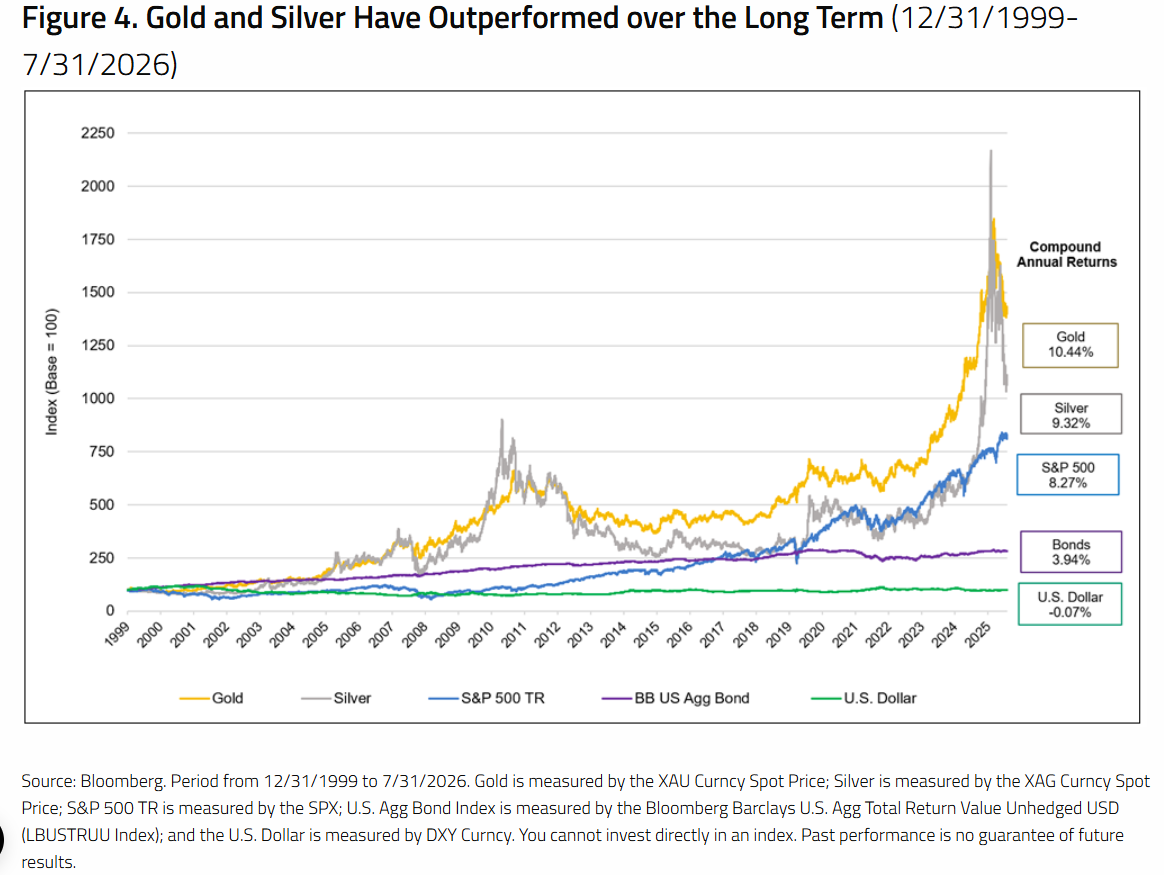
(Kitco News) – Gold’s months-long price decline was a not a trend reversal but only a correction, with rising debt, high deficits, central bank buying and geopolitical fragmentation reinforcing gold's strategic role, while silver's outlook remains compelling due to constrained supply and growing demand, according to Maria Smirnova, Managing Partner at Sprott Inc. and Senior Portfolio Manager and Chief Investment Officer at Sprott Asset Management.
In Sprott’s latest precious metals report, Smirnova said the first seven months of the year served to remind investors that cyclical corrections are a normal feature of secular bull markets.
“While gold and silver retreated from January's record highs, the macroeconomic and structural forces underpinning both metals remain firmly intact,” she noted. “Gold bullion gained more than 64.58% in 2025, while silver bullion advanced 147.95%, driven by record central bank buying, persistent inflation concerns, rising sovereign debt and growing geopolitical uncertainty. By late January 2026, both metals had extended those gains, reaching new all-time highs as investors continued to seek hard assets amid an increasingly uncertain macroeconomic environment.”
Smirnova said that while the subsequent correction was meaningful, it was not unusual.
“After peaking in January, gold and silver retreated sharply through the end of the second quarter before stabilizing around $4,000-$4,100 per ounce and $55-$60 per ounce, respectively,” she wrote. “Despite these declines, both metals remained well above year-ago levels and have recently begun moving higher again as geopolitical tensions in the Middle East and inflation concerns have encouraged safe-haven demand.”
Smirnova said it’s important to recognize that the correction reflected cyclical forces rather than deteriorating fundamentals.
“Rising sovereign debt, persistent fiscal deficits, central bank diversification away from the U.S. dollar, geopolitical fragmentation and, in silver's case, growing industrial demand continue to provide a supportive backdrop for precious metals,” she said. “Rather than undermining the secular bull market, this year's volatility has tested investor conviction while reinforcing the long-term investment case for both gold and silver.”
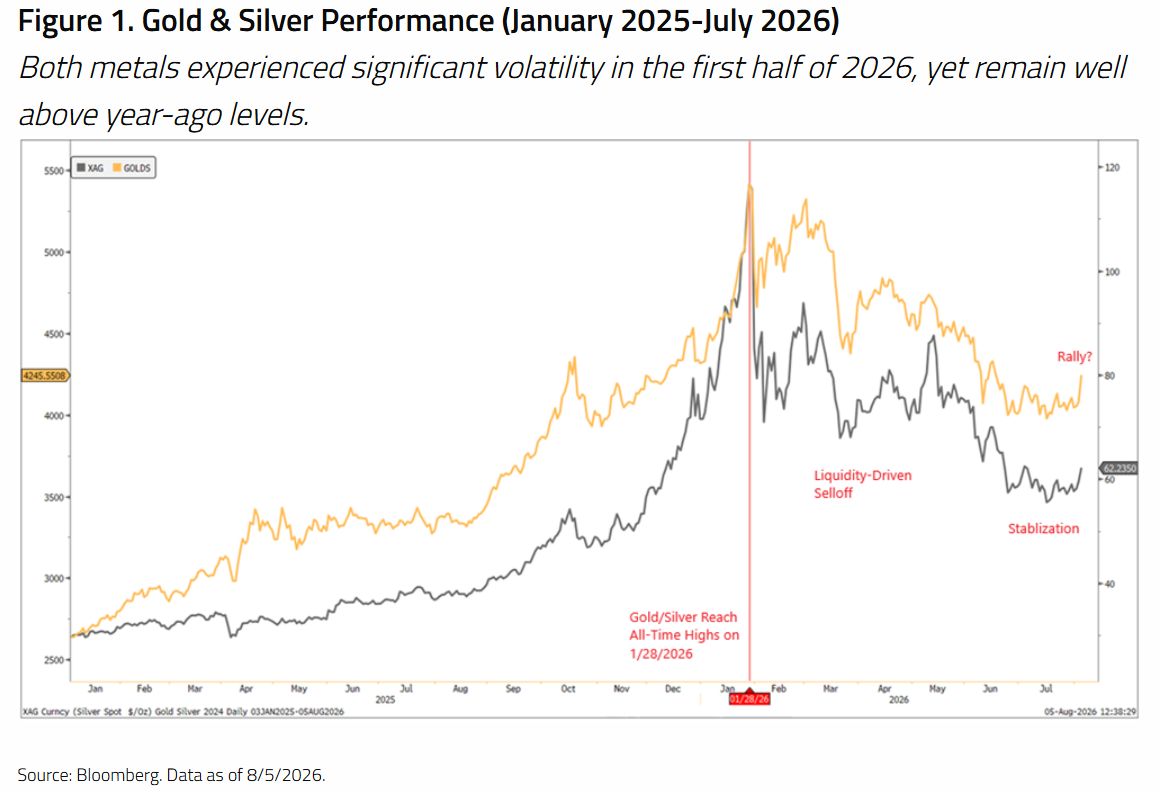
Smirnova said gold's 2026 performance can be viewed in three distinct phases.
“The year began with one of the strongest rallies in decades as investors increasingly questioned the long-term sustainability of sovereign debt, widening fiscal deficits and the credibility of traditional reserve assets,” she noted. “Central bank demand remained robust, geopolitical tensions intensified and investors increasingly viewed gold as a neutral reserve asset outside the traditional dollar-based financial system. These forces propelled gold to successive record highs through late January.”
The second phase kicked off in March as geopolitical events triggered an unexpected tightening in global liquidity. “Rather than benefiting immediately from heightened uncertainty, gold sold off sharply as leveraged investors liquidated positions to raise cash,” she wrote. “Additional pressure emerged during the second quarter following the U.S.-Iran Memorandum of Understanding, falling oil prices, a stronger U.S. dollar and expectations that U.S. monetary policy would remain restrictive for longer.”
But by early summer, most of the selling pressure had dissipated, with gold stabilizing near $4,000 per ounce as physical demand picked up while central banks continued buying.
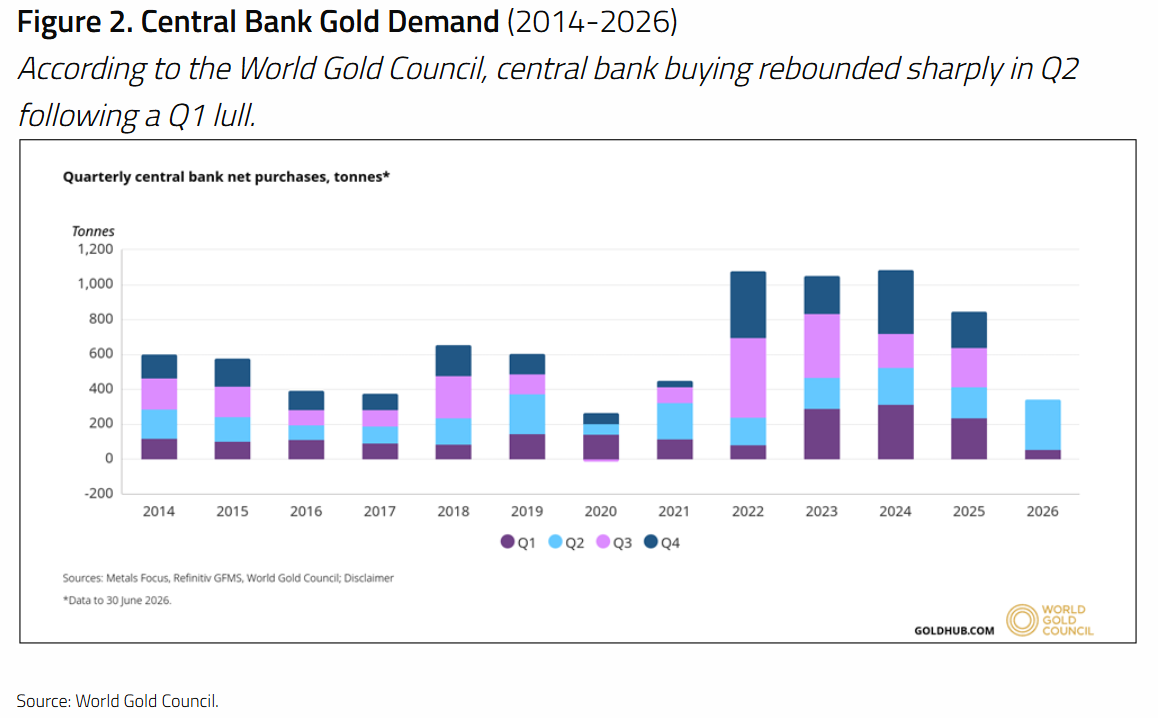
“Despite significant price volatility, central banks continued to diversify reserves away from traditional reserve currencies, reinforcing gold's role as a strategic monetary asset,” Smirnova said. “Throughout the correction, official-sector buying helped establish a durable floor beneath the market, illustrating the distinction between cyclical investor flows and long-term structural demand.”
And Sprott sees this strong fundamental backdrop extending to mining stocks as well.
“Following a strong 2025, precious metals mining equities have retreated in line with bullion prices in 2026, as tighter financial conditions and shifting investor preferences have weighed on the sector,” she wrote. “Much of this year's equity market leadership has been concentrated in U.S. large-cap technology and AI-related companies, limiting capital flows into more cyclical sectors, including mining.”
But despite the pullback, gold producers continue to see strong margins, robust free cash flow and disciplined capital allocation. “Balance sheets remain healthy, capital continues to be returned to shareholders through dividends and share repurchases, and ongoing industry consolidation reflects the strategic value of high-quality assets and reserve replacement,” she said. “While valuation multiples remain below prior-cycle levels, we believe the sector's underlying fundamentals continue to compare favorably with current equity valuations.”
Turning to silver, Smirnova noted that the gray metal’s year has been even more dramatic year than gold’s.
“Following record highs early in 2026, silver declined sharply during the second quarter as industrial metals weakened, speculative positions were unwound and investors reduced exposure to economically sensitive assets,” she said. “Given silver's smaller market size and higher participation by leveraged traders, these corrections were amplified relative to gold. Yet silver's long-term fundamentals remain compelling.”
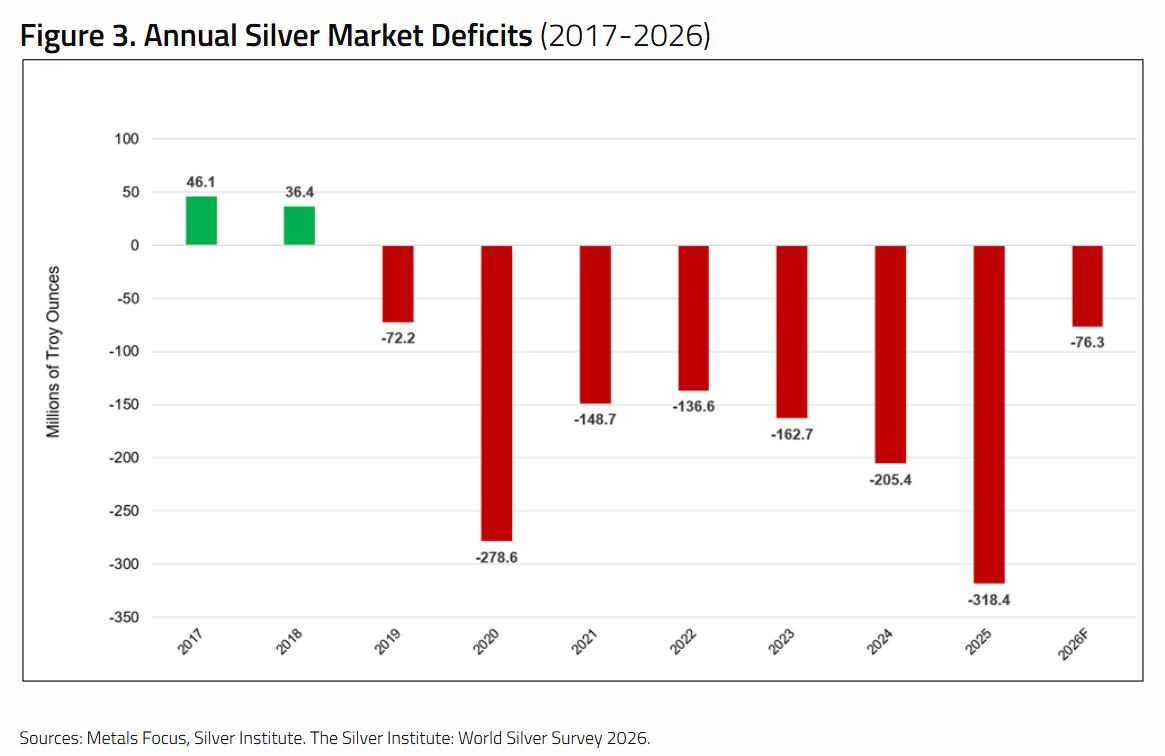
Silver, unlike gold, is purchased for both its monetary and industrial applications. “Demand continues to grow from solar power, electrification, artificial intelligence infrastructure, advanced electronics and electrical grid investment, while mine supply has struggled to keep pace,” Smirnova wrote. “The result has been several consecutive years of structural market deficits that continue to draw down above-ground inventories.”
“Silver's rebound toward > $60 per ounce suggests investors are once again recognizing these longer-term supply-demand dynamics.”
Sprott remains very bullish on both gold and silver going forward.
“As we move through the remainder of 2026, we believe investors should distinguish between cyclical volatility and secular trends,” Smirnova said. “Much of the market's adjustment to higher interest rates, tighter liquidity, and a stronger U.S. dollar now appears to have been reflected in prices. Meanwhile, the long-term forces supporting precious metals remain firmly in place. Expanding sovereign debt, persistent fiscal deficits, central bank reserve diversification and an increasingly fragmented geopolitical landscape continue to reinforce gold's role as a strategic reserve asset. Silver remains supported by both its traditional monetary role and rapidly growing industrial demand tied to electrification, renewable energy, artificial intelligence infrastructure and advanced manufacturing.”
While periods of extreme volatility may be uncomfortable for investors, Smirnova said they remain an inevitable feature of long-term bull markets.
“In our view, the correction has improved the long-term risk-reward profile for precious metals,” she said. “For investors able to distinguish cyclical volatility from structural trends, the secular investment case for both gold and silver remains compelling.”
See live precious metals prices for gold, silver, platinum and palladium — in USD, CAD and 12 more currencies.
