
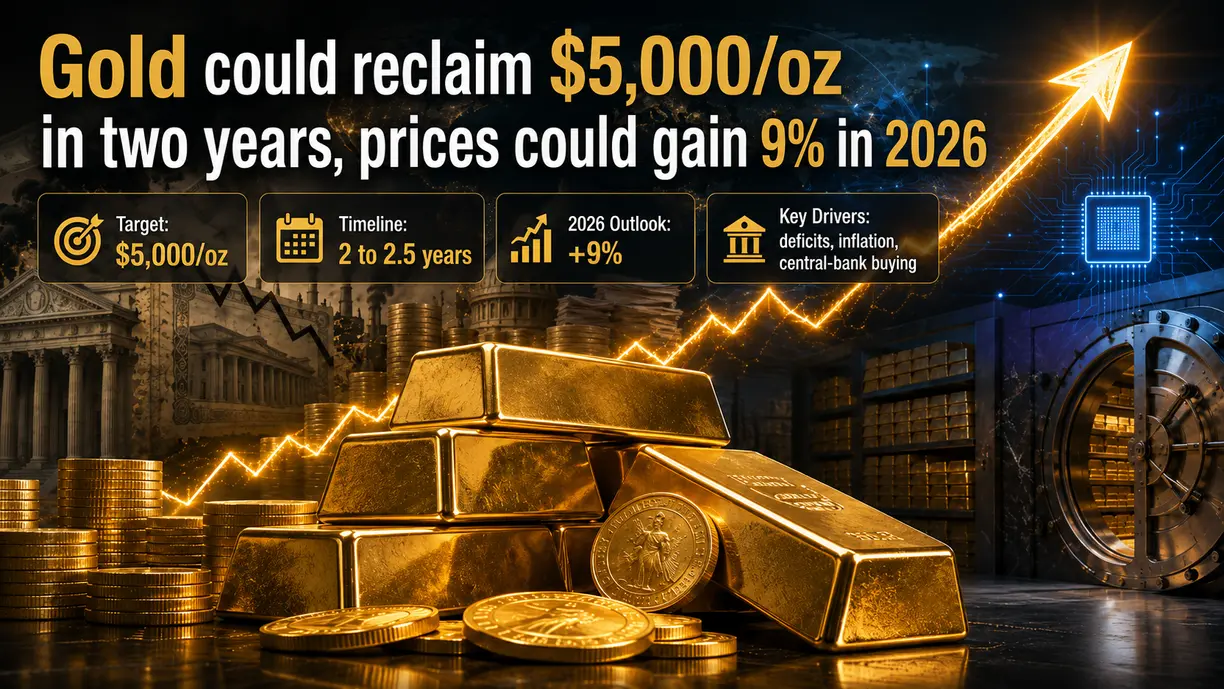
(Kitco News) – Gold’s nearly $300 breakout rally last week is generating renewed momentum in the market, and even if prices need more time to digest this latest move, one fund manager said the precious metal has a clear path back to $5,000 an ounce.
In an interview with Kitco News, David Miller, CIO and Co-Founder of Catalyst Funds and portfolio manager of the Strategy Shares Gold Enhanced Yield ETF (GOLY) said that gold may still need time to reclaim its previous highs, but the long-term forces supporting the precious metal remain firmly in place as persistent government deficits, inflation and central bank diversification continue to undermine the appeal of traditional fixed-income assets.
Miller said he believes gold could eventually return to $5,000 an ounce, although investors should not necessarily expect an immediate move back to those levels.
“I think you could see 5,000 an ounce, but I think it could take two, two and a half years to get back there,” he said.
Miller said gold’s previous move above $5,000 was fueled by several factors, including falling interest rates, speculative investment demand and, most importantly, aggressive central-bank buying.
Although some of the urgency behind that buying has diminished, Miller said the structural case for sovereign institutions to diversify away from the U.S. dollar remains intact.
He noted that geopolitical and economic tensions have forced countries to reconsider how much of their sovereign wealth they want tied to dollar-denominated assets. Even though some of the immediate tariff-related pressures have eased, he expects China in particular to remain a significant long-term buyer of the precious metal.
Combined with continued U.S. deficit spending, that central bank demand should provide an important floor beneath the market, Miller added.
“I think we can grow mid-high single digits in terms of the price of gold for this year,” he said.
Miller’s bullish long-term outlook comes even as gold has moved through a period of consolidation following an exceptionally strong run. He said the market’s fundamental investment thesis has not materially changed despite the pullback.
The bigger issue, he said, is the deteriorating long-term purchasing power of fiat currencies as governments continue running large deficits against already elevated debt levels.
Miller explained that traditionally there are three broad ways governments can ultimately address their debt burdens: inflation, dramatic productivity improvements or austerity.
The first is to reduce the real value of debt through inflation. The second is for economic productivity to improve substantially, potentially through artificial intelligence. Miller said a surge in productivity could allow economies to grow fast enough to offset some of the inflationary pressure associated with elevated debt.
“You could have a combination of inflating your way out of it with AI-led improvements in productivity,” he said.
The third option is austerity, which Miller described as politically difficult because of the economic pain associated with significant spending cuts.
Miller added that inflation running around 3%, rather than returning all the way to the Federal Reserve’s 2% target, would not necessarily be problematic if nominal economic growth remained strong enough.
“If you don't hit a 2% inflation target and you're somewhere in the threes … and you have some productivity growth, I think that's actually okay long term,” he said.
For gold investors, persistent inflation also strengthens the argument for holding real assets, particularly if yields on bonds fail to provide attractive returns after accounting for inflation and taxes.
That dilemma is central to the investment thesis behind the Strategy Shares Gold Enhanced Yield ETF, Miller said.
Traditional bonds provide income, but their purchasing-power benefits can quickly disappear when inflation is running close to their nominal yields. After taxes, Miller said investors can effectively end up with a negative real return.
Gold and other real assets offer inflation protection, but physical gold itself does not generate income.
GOLY is designed to bridge that gap by combining exposure tied to gold with income generated from investment-grade corporate bonds.
“We think this marriage of owning bonds overlaid with the price of gold is a way to give investors their cake and let them eat it too,” Miller said.
See live precious metals prices for gold, silver, platinum and palladium — in USD, CAD and 12 more currencies.
